Final project
Final Project
Final Project Plan
The Project Plan is a written document listing the team members, overviewing the topic (for example, speech recognition) to be addressed by the project, with a literature or research review relevant to the proposed project, complete with citations and references in standard (e.g., IEEE journal) format, and a plan as to the specific project and goals to be performed. That is, the Project Plan should be a description of the intended final "product", (e.g., DSP-based program for recognition of the digits 0-9), and a description of the specific algorithms or approach that will be taken for the implementation, based on the results of the literature/background review. Typically, this would consist of a detailed block diagram of the proposed system along with which algorithm or method will be used to implement each block. The Plan should summarize two milestones to be achieved during the course of project development, along a description of the final deliverable and mock-up of the application. The minimum viable product (MVP) and stretch goals should be clearly delineated. The Project Plan can generally be expected to serve as a basis for the Introduction, Background Research, and parts of the system design portions of the Final Report, should the proposed approaches prove successful.
Project Teams
Final projects must be completed in teams of 2–3 students. It is expected that a group of 3 team members will have a project of larger scope than a team with 2 members. Individual projects are NOT allowed.
Students are responsible for forming a team by the announced deadline. If you are unable to find a project partner, contact the teaching staff before the deadline so that we can help arrange a team.
The project is designed as a collaborative engineering activity involving DSP algorithm development, Python/Android implementation, testing, debugging, and technical discussion. Team members may divide responsibilities, but all members are expected to understand the complete project and the primary DSP algorithm.
During project milestones and the prototype/final demonstration, the teaching staff may ask any team member to explain, modify, or demonstrate any major part of the project.
The Final Project Plan must be submitted using the provided LaTeX template. Submissions that do not use the required format will not be graded.
✅ Latex Template
ECE 420 Final Project Plan
Team members: _______________________________________________
Lab section: __________________
Project title: _______________________________________________
The Final Project Plan defines the functionality and scope of your final Android application. Your final project should build upon what you learned from the prototype and integrate the DSP algorithm into a functional Android application.
Final Project Objective
Final Project Objective
In one or two sentences, describe what your completed application will do.
Your objective should describe the functionality that you expect to demonstrate at the final project demo.
Final project objective:
______________________________________________________________________ ______________________________________________________________________
Example: Implement a Face ID Android application that registers up to five users and identifies a registered user in real time using the tablet camera.
Changes from the Prototype
Changes from the Prototype
Briefly summarize the status of your prototype and explain what will be added, changed, or improved for the final project.
What worked in the prototype?
List 2–3 major functions or results that were successfully demonstrated.
____________________________________________________________________
____________________________________________________________________
____________________________________________________________________
What will be changed or added?
List the major additions required to turn the prototype into the final Android application.
____________________________________________________________________
____________________________________________________________________
____________________________________________________________________
Do not simply state that the algorithm will be "improved." Identify specific changes or new functionality.
DSP Algorithm
DSP Algorithm
Identify the primary DSP algorithm used in the final project.
Main DSP algorithm: ______________________________________________________________________
Summarize the algorithm in 2–4 sentences. You do not need to repeat the detailed description from the Prototype Plan.
______________________________________________________________________
Changes to the DSP Algorithm
If your algorithm has changed since the prototype, briefly describe the changes.
[ ] No major change from the prototype.
[ ] Modified version of the prototype algorithm.
[ ] New algorithm.
If modified or new, explain briefly:
______________________________________________________________________
Final System Block Diagram
Provide a block diagram showing the complete final system, including Android input/output, DSP processing, decision logic, and user interface where appropriate.
Example:

Android Application Plan
Android Application Plan
Describe how the DSP algorithm will be integrated into your Android application.
Android Input(s)
Select all that apply.
[ ] Camera
[ ] Microphone
[ ] Accelerometer
[ ] Gyroscope
[ ] Other IMU sensor: __________________
[ ] Touchscreen
[ ] Stored data/file
[ ] Other: _____________________________
Android Output(s)
[ ] Display
[ ] Speaker
[ ] Vibration
[ ] Stored data/file
[ ] Other: _____________________________
Application Workflow
Describe the major steps that a user will follow when running your application.
__________________________________________________________________
__________________________________________________________________
__________________________________________________________________
__________________________________________________________________
__________________________________________________________________
User Interface
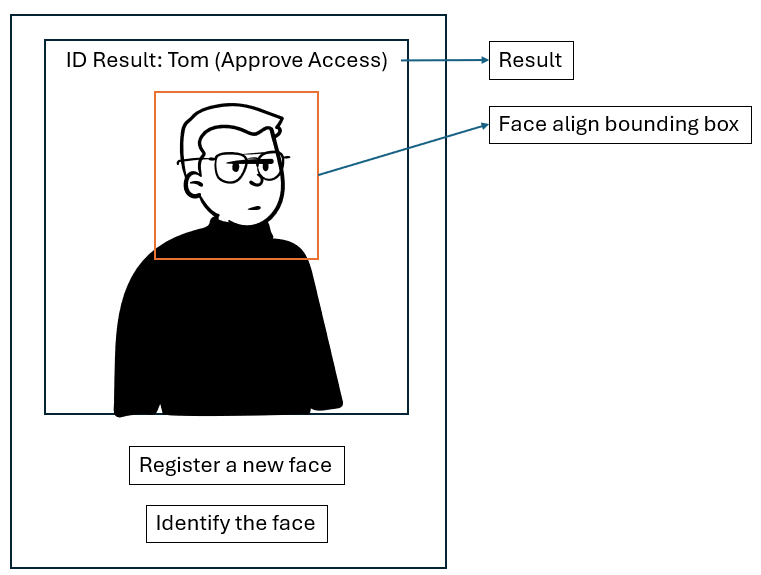
Briefly display a screenshot mockup including the major UI components that you plan to implement.
Examples include buttons, camera preview, plots, status indicators, registration screens, parameter controls, or result displays.
Minimum Required Functionality
Minimum Required Functionality
Define the minimum functionality that your group commits to demonstrating at the final demo.
These items form the primary scope of your final project.
Required Function 1
______________________________________________________________________
Required Function 2 (optional)
______________________________________________________________________
Required Function 3 (optional)
______________________________________________________________________
Be specific. Each item should describe functionality that the teaching staff can directly observe and evaluate.
Good example: The application will identify one of five registered users from live camera input.
Poor example: We will improve the recognition algorithm.
Stretch Goals
Stretch Goals
List optional functionality that you will attempt only after the minimum required functionality is working.
Stretch Goal 1
______________________________________________________________________
Stretch Goal 2 (optional)
______________________________________________________________________
Stretch goals are not substitutes for completing the required functionality.
Testing and Validation Plan
Testing and Validation Plan
Describe at least three tests that you will use to evaluate the completed system.
Include tests of both the DSP algorithm and the integrated Android application when appropriate.
| Test | Test condition / input | Expected result / success criterion |
|---|---|---|
| 1 | ||
| 2 | ||
| 3 | ||
| 4 (optional) |
Whenever possible, define a quantitative success criterion such as accuracy, error, processing rate, latency, SNR, distance, or another measurable quantity.
Milestone Plan
Milestone Plan
Define what your group expects to demonstrate at each project milestone.
Milestones should describe working functionality, not simply activities such as "work on the Android app" or "debug the algorithm."
Milestone 1
Functionality to demonstrate:
______________________________________________________________________
Milestone 2
Functionality to demonstrate:
______________________________________________________________________
Good example: The first milestone focuses on implementing the core recognition pipeline. We will demonstrate the system taking a preprocessed face image, projecting it into the Eigenface subsapce, comparing it against a stored databse, and returning the closest matching identity.
Poor example: We will will demonstarte the Eigenface algorithm.
Team Responsibilities
Team Responsibilities
Briefly identify the primary responsibilities of each team member.
| Team Member | Primary Responsibilities |
|---|---|
| Student A | Face detection and preprocessing |
| Student B | Eigenface algorithm and UI |
All students are expected to understand the overall system and primary DSP algorithm, regardless of how implementation tasks are divided.
Final Project Scope
This Final Project Plan serves as an agreement between your group and the teaching staff regarding the expected scope of the project.
The plan will be evaluated primarily on whether:
the final objective is clear and feasible;
the transition from prototype to final application is well defined;
the DSP algorithm remains a meaningful part of the project;
the Android implementation plan is specific;
minimum functionality is clearly distinguished from stretch goals;
milestones represent demonstrable progress; and
the testing plan provides a meaningful way to evaluate the completed system.
You are not graded on producing polished prose. Concise and specific engineering descriptions are preferred.
Each team member is responsible for understanding the complete project. During milestones and the final demonstration, teaching staff may ask any team member questions about the DSP algorithm, Android implementation, system architecture, testing, or results.
Project Milestones
During the project, students will have to demonstrate 2 milestones toward the completion of their projects. The Project Plan must clearly state what are deliverables at each of these project milestones as "contract" between the student and the ECE 420 teaching staff. These project milestones will be evaluated based on this contract.
Final Project Demo and Presentation
The final project demonstration will be a scheduled but relatively formal review by the ECE 420 teaching staff of the (hopefully) completed project in action. The project team will deliver a presentation describing the final project deliverable and the algorithms/approach taken in implementing that deliverable. The project team will then demonstrate their system, or all working components if incomplete, perform verification experiments or show test results confirming to the satisfaction of the course staff that it works as designed, and answer any questions.
Final Report
Each project team will submit a final report. This written report should include at least:
Final Report
Introduction
Literature or Research Review
Technical Description of the project including equations, block diagrams, and possibly pseudocode
Screenshots illustrating the application "in action" and highlighting salient features of your app
Final results section including descriptions of the testing done on the project and problems encountered
Suggestions for Extensions and/or Modifications
Software/Hardware Documentation including an overview of the program structure (e.g. responsibilities for each file/function), logic diagrams, etc., as applicable
There is not a strict page requirement, but 10-15 pages is a reasonable range to consider. The documentation should be concise, but sufficient to convey the application's purpose and underlying algorithm structure and implementation. Another student should easily be able take up where the project left off or to use the results in a future project.
CC BY-SA 4.0 Thomas Moon. Last modified: October 05, 2026.
Website built with Franklin.jl and the Julia programming language.